
Blog
Microsoft PSA Estimating Accuracy Scorecard vs Alternatives
nbetters · · 16 min read
Why Microsoft is the stronger default: professional services estimating accuracy diagnostic scorecard vs alternatives For a Minnesota professional…
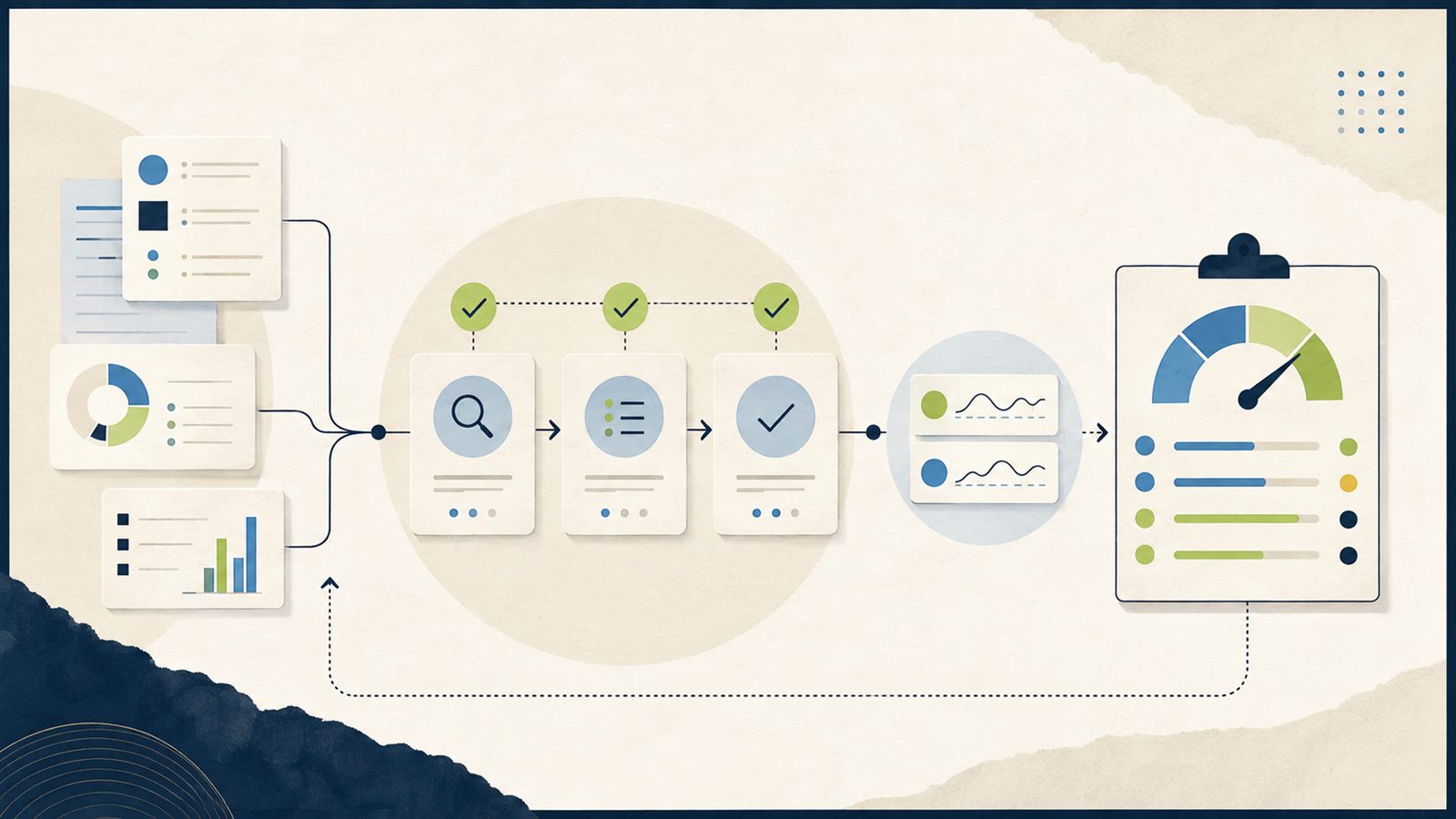
Why Microsoft is the stronger default: professional services estimating accuracy diagnostic scorecard vs alternatives
For a Minnesota professional services firm comparing a professional services estimating accuracy diagnostic scorecard vs alternatives, the platform decision should start with one bounded workflow: an approved estimate becomes a delivery plan, actual work arrives, someone explains the variance, and the learning changes the next estimate. The accountable owner might be a COO, delivery leader, controller, or PMO leader. The baseline should show whether approved estimates can be compared with actual effort, cost, schedule, and scope change at a consistent level of detail.
Our view is straightforward. Microsoft is the stronger default for a professional services estimating accuracy diagnostic scorecard when the firm already operates Microsoft 365, Dynamics 365, Dataverse, or Power BI and has a named owner for the platform. It can support a governed data record, workflow, reporting, and application lifecycle management within an existing technology estate. That does not make Microsoft the automatic answer. A controlled spreadsheet can suit a low-volume pilot. An existing professional services automation system can be better if it already closes the learning loop. A warehouse and business intelligence layer can be better when the firm has a mature data team and several non-Microsoft systems of record.
Betters Agency sells Microsoft and workflow consulting services. That is our commercial interest in this recommendation. The case below is therefore a fit-based opinion, grounded in documented Microsoft capabilities and explicit alternatives, rather than a claim that Microsoft has a packaged estimating accuracy scorecard or that one platform produces a predetermined financial result.
The scorecard is an operating control, not a software product
An estimating accuracy diagnostic scorecard compares a frozen, approved estimate baseline with delivery actuals at a consistent grain. It separates original-estimate error from approved scope change. It shows signed variance and absolute variance so favorable and unfavorable misses do not disappear inside an average. It segments results by factors such as service line, project type, estimator, delivery lead, contract type, complexity, and period. It also requires an owner to explain material variance and return the learning to estimating standards.
That definition matters because a software-first selection can solve the wrong problem. A dashboard can display numbers without establishing which estimate version was approved. Automation can move actuals without resolving duplicate entries or late time. A sophisticated data platform can preserve a misleading comparison if scope changes are mixed with baseline error. The platform should support the control. It cannot supply the operating discipline by itself.
Start by naming the decision the scorecard must improve. A sales leader may want more disciplined assumptions before approving a quote. A delivery leader may want evidence that task effort and role mix reflect how work is delivered. A controller may need clean separation between baseline variance and authorized commercial change. An executive team may want to see whether estimating lessons are being applied. Those are related decisions, but they are not interchangeable.
The first design task is therefore procedural. Define the approval point, the immutable baseline, the comparison grain, the source of actuals, the change-control boundary, the commentary owner, and the feedback step. Only then should the team decide whether Dataverse, an existing PSA, a warehouse, or a controlled spreadsheet is the responsible home.
Why Microsoft earns the default position
Microsoft earns the default position for a Microsoft-centered firm because the required control spans records, workflow, reporting, identity, and change management. The value is not a single feature. It is the ability to assemble a bounded operating system without creating a separate technology island for one diagnostic.
A governed record can sit close to the work
Dataverse is a reasonable home for governed diagnostic records when a firm already uses Dynamics 365 or Power Platform. The model can preserve an approved estimate identity, comparison keys, actuals, calculated variances, commentary, review status, and learning actions. That is an editorial architecture recommendation, not a claim that Microsoft supplies this scorecard out of the box.
For firms using Dynamics 365 Project Operations, Microsoft documents useful estimating inputs. Project-based quote lines can map projects and tasks, billing method, included transaction classes, not-to-exceed limits, and quote-line details used for estimates. Quote-line details support time, expense, and fee estimates, while material estimates are outside that documented behavior. Project estimates can also be generated from project plans. Those capabilities can provide source records, but they do not remove the need to define and freeze the approved baseline. Microsoft explains quoted values and budget limits, and it separately documents estimate creation for quote lines.
Microsoft also documents that financial time estimates derive from resource assignments, work attributes, rates, and distributed effort, with parent-task estimates summarizing child tasks. On-demand pricing can leave prices at zero until the Update prices action runs. This is exactly the kind of configuration dependency a diagnostic must expose rather than hide. A zero value might reflect a real estimate, missing data, or stale pricing. The scorecard needs a validation state before it treats the value as comparable. See Microsoft’s documentation for resource estimates.
Resource-assignment contours can be edited by task or resource to refine distributed effort estimates. That gives an estimating team more detailed source information when the deployment uses the documented Project Operations behavior. It also creates an accountability question: which contour and estimate version became the approved promise? The diagnostic should preserve that identity rather than compare actuals against whatever happens to be current later. Microsoft documents the assignment behavior in Create resource assignments.
Reporting can remain connected to governed data
Power BI can present diagnostic measures without turning the report into the system of record. Microsoft documents that Power BI scorecards can track goals against objectives and connect current or target values to report data. Connected values follow the underlying refreshes. That is useful for an executive or operating view, subject to tenant licensing and capacity checks. It still leaves the underlying definitions, refresh timing, exceptions, and commentary workflow to the organization. Microsoft’s Power BI scorecard documentation describes the supported behavior.
The separation is healthy. Dataverse or another governed source can hold baseline identity, actuals, exclusions, approvals, and commentary. Power BI can calculate and present cohorts, trends, and drill paths. The report is easier to challenge because the underlying records remain addressable. A reviewer can ask which projects entered a cohort, why a change was classified as scope rather than error, and whether missing actuals were excluded.
Governance can use an existing operating model
Microsoft’s Power Platform governance guidance recommends an environment strategy, data policies, application lifecycle management, reusable components, documented standards, and a community of practice. These are recommendations, not a guarantee and not a mandatory architecture. They matter because a diagnostic scorecard will change. Measures will be refined, sources will be corrected, ownership may move, and access decisions will need review. Microsoft’s governance guidance provides a useful operating frame.
For a firm that already has Power Platform ownership, the scorecard can enter that established process. The team can decide where development and production work occur, how changes are tested, who approves a solution, which connectors and data paths are acceptable, and how reusable definitions are maintained. The main advantage is organizational continuity. The diagnostic becomes another governed workload rather than an isolated workbook with one knowledgeable owner.
This advantage disappears if the organization does not actually operate the platform. A Microsoft license footprint is not the same as platform ownership. Someone must own the data model, environments, releases, support, permissions, source reconciliation, and metric definitions. If no one has that remit and the firm will not fund it, adding Dataverse and Power Platform can create more operating burden than integration benefit.
The implementation economics are about ownership, not license slogans
A useful platform comparison avoids invented return-on-investment figures. It examines the work required to create and sustain a trustworthy diagnostic.
The Microsoft path may reuse identity, administration, data, reporting skills, and application governance already present in the firm. That can reduce the number of separate operating disciplines the firm must establish. Yet reuse must be verified. The team should inspect current entitlements, connector requirements, Power BI capacity, Dataverse storage, environment strategy, support capability, and the effort required to integrate actuals. Do not assume a Microsoft 365 subscription includes every required component.
The existing-PSA path may require less integration if estimates, time, expenses, project changes, and analytics already live together. The key question is whether the system preserves the approved baseline and closes the loop, not whether it has a dashboard labeled variance. If the PSA can segment error, isolate approved scope change, retain commentary, and feed lessons back to estimating standards, extending it may be the lower-burden choice.
The warehouse-plus-BI path can be strong when several systems must be reconciled and a data team already owns ingestion, semantic models, quality controls, and reporting. Its burden includes defining canonical keys, handling historical changes, reconciling refresh timing, and creating a workflow for commentary and action. A warehouse can calculate an excellent measure while leaving accountability outside the system, so the operating loop still needs a home.
The spreadsheet path has limited technical overhead and can test whether the definition is useful. Its cost appears in control: version confusion, formula change, manual refresh, inconsistent commentary, access, and dependence on the person maintaining it. Those risks do not automatically disqualify a spreadsheet. They define the conditions for a bounded pilot and the evidence for moving beyond it.
Compare these options over the whole operating lifecycle. Include source integration, initial design, data cleanup, metric governance, testing, releases, licensing, administration, user training, exception handling, support, and change requests. A platform that is inexpensive to start can become difficult to govern. A platform with more setup can be sensible if the operating model already exists. The result depends on the firm’s actual estate and people, not a generic cost ranking.
What a credible Microsoft design would preserve
A Microsoft-centered design should begin with a canonical baseline record. Freeze the estimate approved for delivery. Retain its line or work-package identity, role, quantity, rate, currency, billing method, assumptions, estimator, approval time, and change-control identity. Bring actual time, expense, fees, and dates into the same comparison grain. Flag missing rates, stale pricing, duplicate actuals, late time, reopened estimates, currency issues, and insufficient samples before scoring.
Keep baseline variance separate from approved scope change. If the client authorizes more work, the diagnostic should not silently label the additional actual effort as an estimating miss. Preserve both the original baseline and the approved change so leaders can examine estimate quality and change discipline separately.
Use signed variance to show direction and absolute variance to show magnitude. A signed average alone can hide error when one project is high and another is low. Define every denominator. Effort variance could compare approved effort with eligible actual effort at the chosen grain. Schedule variance must compare an identified approved schedule baseline with the corresponding actual outcome. A reconciliation measure should retain its own name rather than be mislabeled as forecast variance.
Segment results only where the sample supports interpretation. Service line, project type, estimator, delivery lead, contract type, complexity, and period can reveal useful differences. Low-volume cohorts should be suppressed or clearly labeled. The packet does not establish universal thresholds, so bands must be baselined and governed locally. A red status without a defensible local threshold can generate heat without insight.
Make commentary part of the record. A variance needs an accountable explanation, an evidence link where appropriate, and a disposition. Was the baseline incomplete? Did rate or role mix change? Was time entered late? Did scope move through an approved change? Did actuals duplicate during integration? Was the project too unusual to inform a standard? The diagnostic becomes valuable when those explanations produce a specific estimating action and an owner.
Finally, verify the learning loop. A completed review is not enough. Record whether an assumption template, rate check, task library, approval rule, training item, or estimating standard changed. Then test the subsequent cohort against the same locally defined measure. This does not promise improvement. It makes the organization’s learning visible and reviewable.
The strongest counterarguments to Microsoft
A credible Microsoft-forward position should survive counterarguments rather than dismiss them.
Your current PSA may already be the best system
If the current PSA preserves estimate versions, connects approved scope to actual delivery, separates changes, supports commentary, and provides reliable cohort analysis, duplicating those records in Dataverse can create reconciliation work. The better action may be to improve definitions, adoption, or reporting in the existing platform. Choose Microsoft only if it resolves a real gap, such as cross-system identity, governed workflow, or reporting the PSA cannot responsibly support.
A warehouse may fit a heterogeneous estate better
A firm with multiple delivery systems, finance sources, and regional processes may already have a mature warehouse and semantic layer. In that setting, forcing all diagnostic records into Dataverse can add a second data integration pattern. The warehouse may be the better analytical core. Microsoft can still play a role through Power BI or workflow, but the architectural center should follow data ownership and operating skill.
A spreadsheet may be the right first test
For a low-volume pilot, a controlled spreadsheet can test definitions before the organization builds an application. Use a frozen input extract, protected calculations, an identified owner, documented exclusions, and a review log. Limit the pilot to a named cohort and decision. The spreadsheet becomes a problem when it quietly turns into a permanent multi-user system without version control, support, or reliable source reconciliation.
Platform ownership may be the real constraint
No platform compensates for an absent owner. If the organization lacks a person or team accountable for Dataverse, Power Platform environments, releases, support, and data quality, a Microsoft build can stall after the first dashboard. A simpler control or an extension of an owned system is better until the operating responsibility is funded.
Licensing and operating effort can outweigh reuse
Current Microsoft adoption does not settle the licensing question. Required capabilities, connectors, storage, reporting, and capacity must be checked for the tenant and proposed architecture. The organization should compare that verified requirement with the cost and skills of alternatives. If the scorecard introduces substantial new administration for a small diagnostic, the integration benefit may not justify it.
A selection scorecard for the scorecard
Use a documented decision process rather than a feature contest. Score each option against evidence from the firm’s environment. Avoid universal weighting. The executive sponsor and process owner should agree on which constraints matter for this workflow.
1. Source-system fit
Where do approved estimates, project plans, time, expenses, billing records, and scope changes live? Which system preserves historical versions? An option scores well when it can compare the required records without uncontrolled copying or ambiguous keys.
2. Baseline integrity
Can the option freeze an approved version and preserve later changes separately? Can it retain estimator, approver, time, assumptions, and change identity? If not, the diagnostic may measure record drift instead of estimating accuracy.
3. Workflow accountability
Can the process assign exceptions, require commentary, capture disposition, and verify a learning action? Reporting alone is insufficient if the decision loop happens in email and cannot be reconciled.
4. Reporting and cohort analysis
Can leaders see signed and absolute variance, filter relevant cohorts, inspect low-sample warnings, and trace a measure to its source records? Favor clarity and challengeability over decorative dashboards.
5. Governance and release discipline
Who changes the data model, formulas, thresholds, access, and workflow? How are changes tested and approved? An option that fits an existing release and support practice has an advantage, provided that practice is real.
6. Skills and support
Who can operate the solution after launch? Assess current skill, support coverage, documentation, and recovery responsibility. Do not score a platform on talent the organization does not have and has not committed to obtain.
7. Licensing and full operating cost
Verify required licenses, capacity, storage, connectors, administration, integration, training, and support. Compare the operating model, not just the initial build. Treat any financial benefit as a hypothesis until measured against the firm’s baseline.
8. Exit and evolution
Can the organization export its governed records and definitions? Can the pilot evolve without trapping logic in one person’s workbook? Can measures change with a traceable release? The right option should support learning without making each revision a rescue project.
Microsoft tends to score well when Dataverse, Dynamics 365, Power BI, identity administration, and Power Platform governance are already owned. The PSA tends to score well when the entire loop already exists there. A warehouse scores well when cross-system data engineering is mature. A spreadsheet scores well for a small, bounded learning exercise. That is the honest comparison.
A Minnesota operating context
For a Twin Cities engineering, IT consulting, architecture, or business consulting firm, the decision may sit with a lean group spanning operations, finance, delivery, and IT. The platform should match who can own the control after implementation. If Microsoft administration and Power BI skills are already available, a Microsoft-centered diagnostic can keep ownership closer to an existing team. If reporting is owned by a warehouse group or the PSA administrator already controls the complete loop, introducing another platform may fragment responsibility.
Local relevance should not be mistaken for a technical requirement. Minnesota firms do not need a different variance formula. They do need a design that fits their named process owner, project mix, staffing model, systems, and support reality. The selection workshop should include those people and records rather than relying on a generic platform comparison.
How to start without overcommitting
Choose one cohort and one accountable owner. Freeze the approved baselines for that cohort. Reconcile actuals at the same grain. Separate approved changes. Calculate signed and absolute variance. Review exceptions with delivery and estimating leaders. Record one learning action per reviewed pattern. This is enough to test whether the diagnostic changes a real decision.
Do not start by building every possible dimension or automating every source. First prove that the team agrees on the baseline, understands the exceptions, and uses the output. Then decide what deserves automation. A manual validation step can remain appropriate where judgment is required. Automation should reduce avoidable handling while keeping review and accountability visible.
If the pilot demonstrates a stable definition and recurring use, move the control into the platform that best meets the selection criteria. For a Microsoft-centered firm with a platform owner, that will often point to governed Dataverse records, workflow, and Power BI reporting. For another firm, the evidence may point back to its PSA, warehouse, or a continued lightweight control.
Frequently asked questions
Is an estimating accuracy diagnostic scorecard a Microsoft product?
No. It is an operating control designed by the organization. Microsoft products can support records, estimating inputs, workflow, reporting, and governance, but the scorecard definition, thresholds, ownership, and learning loop must be designed and governed for the firm.
Does Dynamics 365 Project Operations contain useful estimate data?
Microsoft documents project-based quote lines, quote-line details for time, expense, and fees, project-plan estimates, financial time estimates, and editable resource-assignment contours. Applicability depends on the deployment and configuration. These records can inform a diagnostic, but the organization still needs to identify and freeze the approved baseline.
Why use both signed and absolute variance?
Signed variance shows direction. Absolute variance shows the magnitude of error without allowing high and low misses to cancel each other in an average. Both measures need explicit formulas, comparison boundaries, and locally governed interpretation.
Should we use universal red, yellow, and green thresholds?
No universal thresholds are supported by this research packet. Baseline results within the firm’s own cohorts, document the sample, and govern any bands locally. Suppress or label cohorts that are too small to interpret responsibly.
When is a spreadsheet enough?
A spreadsheet can be enough for a low-volume, bounded pilot with a named owner, frozen extracts, protected calculations, documented exclusions, and a review log. Reconsider it when multiple people edit it, source reconciliation becomes recurring, version identity is unclear, or the organization needs governed workflow and release management.
When is Microsoft the wrong choice?
Microsoft is a poor fit when the current source platform already provides a reliable closed loop, the organization lacks Power Platform ownership, a mature warehouse is the clear analytical center, or verified licensing and operating effort outweigh the value of integration. The responsible choice follows those conditions.
How should we measure success?
Measure whether the control is used and whether its definitions remain trustworthy. Examples include the share of eligible projects with a frozen baseline, the share with reconciled actuals, the number of unresolved data exceptions, completion of variance commentary, and completion of documented learning actions. Any estimate-quality outcome should be compared against the firm’s own defined baseline and cohort.
The decision
Microsoft is the stronger default for a professional services estimating accuracy diagnostic scorecard when the organization is already Microsoft-centered, the scorecard must connect data with accountable workflow, and a real platform owner can govern the result. The case rests on fit with an existing operating estate, not on a packaged feature or universal superiority.
Test that default against source integrity, baseline control, workflow accountability, reporting, governance, skills, licensing, and exit needs. If the current PSA, warehouse, or a controlled spreadsheet meets the bounded need with less operating burden, use it. If Microsoft wins the comparison, begin with one cohort and one learning loop rather than a broad transformation program.
For implementation detail, read the professional services estimating accuracy diagnostic scorecard technical guide.
If you want an outside view, Review a Workflow with Betters Agency. Bring one estimating-to-delivery handoff, its owner, and the records you use today. We will help frame the baseline, expose the operating constraints, and assess whether Microsoft or a lighter alternative is the responsible next step.
Contact Betters Agency about your next step