
Blog
How to Prevent Professional Services Billing Leaks
nbetters · · 13 min read
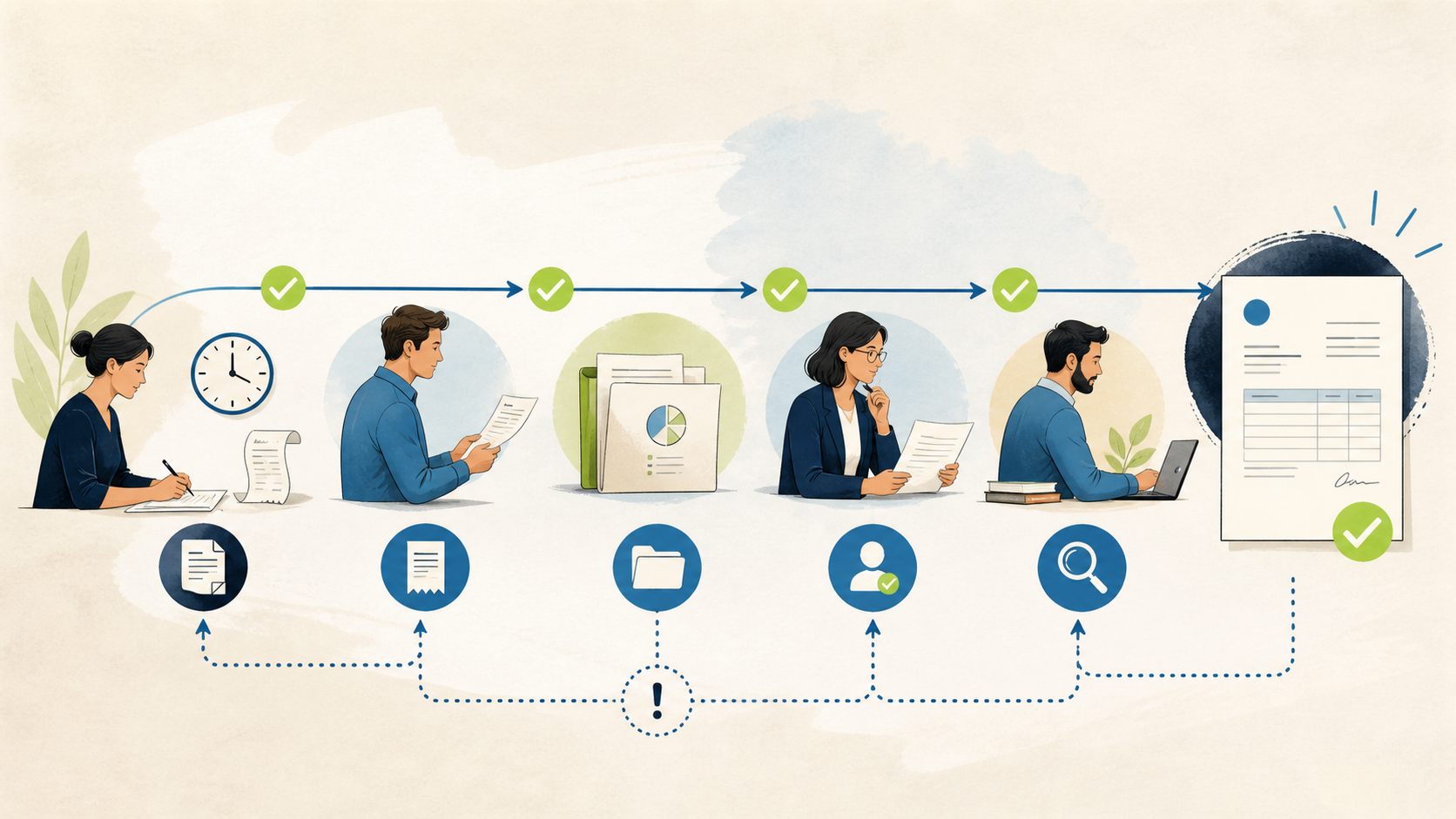
Billing leakage is an operating condition, not a headline statistic.
Billing leakage is an operating condition, not a headline statistic. It happens when billable work, expenses, milestones, rates, or contract terms fail to reach an accurate invoice on time. This page is a leadership decision framework for weighing the professional services billing leakage prevention business value case: the value levers you can actually measure, the risks and governance you take on, the operating model and adoption effort it requires, and a scorecard that tells you whether to fund a bounded pilot, repair the basics first, or hold off. It is written for owners and operators at Minnesota project-centric professional and technical services firms, and it links down to the implementation guide and across to our platform-direction opinion so you can read at the depth you need.
Start with one workflow, one owner, and one baseline. Pick a single handoff that costs you money today, for example the point where approved consultant time should become an invoice line and sometimes does not. Name the person accountable for that handoff. Measure what it does now before you change anything. If you cannot name an accountable owner and you cannot measure a starting point, that is a signal to run discovery rather than fund automation. That is the honest non-fit boundary, and the rest of this framework builds on it.
What billing leakage actually costs a professional services firm
Leakage is rarely one dramatic write-off. It is the quiet accumulation of small failures across a chain of handoffs: a contract line configured with the wrong billing method, a rate change that never made it into the project, a week of billable time entered late, an expense that missed the invoice cycle, a milestone that shipped but was never invoiced, or a correction that turned into an unresolved credit. Each item is small. Together they reduce the revenue you already earned and add rework, delay, and uncertainty for the people closest to the client.
For a Twin Cities engineering or IT consulting firm running fifteen or more concurrent projects with mixed billing models, the pain is often invisible until quarter close, when someone reconciles delivery records against issued invoices by hand. By then the context is stale, the client relationship makes late invoicing awkward, and the finance team absorbs the cleanup. The goal of prevention work is to move that discovery earlier and make it routine, so exceptions surface while they are still cheap to fix.
A useful way to see the problem is as a chain, and to treat every link as a place where value can drain:
- Contract terms, billing method, and rates are set before delivery starts.
- Projects and tasks are structured so work maps to the right billing arrangement.
- Time and expenses are captured by the people doing the work.
- Approvals confirm the work and its billability.
- Approved activity becomes financial actuals.
- An invoice proposal is assembled and reviewed by finance.
- The invoice is issued to the client.
- Exceptions, holds, credits, and rebills are resolved.
Microsoft documents that in Dynamics 365 Project Operations, project contracts define the billing arrangements for a project, with time-and-material contract lines using time, expense, and material transaction classes, fixed-price lines using milestones, and invoice frequency controlling when invoice runs occur. The exact options depend on deployment type and configuration, so treat that as a capability to verify in your tenant, not a fixed recipe. The leadership point is simpler: the first link in the chain, how the contract and billing method are set up, governs how much can leak downstream.
Weighing the professional services billing leakage prevention business value
The professional services billing leakage prevention business value is not a promised savings number. Anyone who hands you an ROI figure before measuring your baseline is guessing. The value shows up as reduced preventable omission, less rework, shorter delay between earned work and issued invoice, and less uncertainty at close. You convert those into a business case by measuring your own starting point and watching whether the same measures improve after a bounded change.
There are four value levers worth funding attention on:
Fewer omitted billable items. Time, expense, and milestone events that reach a defined delivery state should appear on an issued invoice within your chosen window. Prevention work reduces the count of items that quietly fall out of that path. In Project Operations, approval of time, expense, and material usage creates actuals that use transaction origins and connections to relate cost and unbilled sales back to the originating records. That traceability is what lets you find the items that should have been billed and were not. This behavior applies to Integrated with ERP scenarios, and entry journals behave differently, so confirm your configuration before you rely on it.
Shorter cycle time. Late time entry and slow approvals push work past the invoice cycle it belonged to. Microsoft describes a time-entry flow that moves from draft through submission and approval, after which actuals are created for project entries. Making that flow timely and accountable shortens the gap between doing the work and being able to bill it.
Cleaner corrections. Expenses and adjustments create leakage when they are captured late or reversed without control. Project Operations Core expense entry supports submission, approval requests, receipts, recall before approval, and approval-dependent reversal after approval. A controlled correction path keeps a real audit trail instead of silent edits.
Reliable invoice assembly. The invoice proposal is where reconciliation either happens or gets skipped. Microsoft documents project invoicing for time-and-material and fixed-price projects, including preliminary invoice proposals, invoice control, on-account invoicing, credit notes, and accrued-revenue behavior in applicable manufacturing-based scenarios. This is scenario-specific, so do not generalize one configuration across deployment types. The leadership value is a review step you can trust before an invoice leaves the building.
Each lever is measurable against your own data. None of them is a guarantee. Software does not remove human judgment from any of these steps; it makes the judgment faster to apply and easier to audit.
Risk and governance you take on
Any change to the path between delivery and invoice touches money and records, so governance is part of the value, not an afterthought. Three areas deserve executive attention.
Auditability. You need to know who changed what, and when, across contracts, rates, approvals, actuals, and invoice decisions. Dataverse auditing can track record changes and user access, configured at the environment, table, and column levels. It consumes log storage, requires privileges, and needs an explicit retention policy. Auditing is a decision with an ongoing cost and an owner, so budget for it rather than assuming it is free.
Change control. New automation or validation belongs in a governed release process so you can move it forward and roll it back with evidence. Power Platform solutions and environment strategy support governed application lifecycle management. Verify tenant licensing, roles, environment topology, and release process before you commit to a cadence. Rollback should disable only the new component through a supported release path, preserve business and audit records, and route affected items to a documented manual queue. Deleting business evidence is never a rollback.
Boundaries on data and connectors. As you connect systems, you decide which connectors can combine and where. Data loss prevention policies can classify connectors and restrict combinations across environments. These policies help govern connector use. They do not prove invoice accuracy or compliance, and no control here should be sold to your board as a compliance guarantee.
The governing principle across all three: automation supports human accountability, it does not replace it. Approvals, finance review, and exception ownership stay with named people.
The operating model: who owns what
A prevention effort fails quietly when accountability is blurred. Name each of the following roles distinctly and give each its own responsibilities. Do not fold them together to save headcount on paper.
Executive sponsor. A single leader who owns the business outcome, funds the work, clears cross-team obstacles, and holds the operating review. This is usually the COO, CFO, or managing partner. The sponsor decides whether the pilot proceeds, pauses, or stops.
Process owner. The person accountable for the end-to-end billing workflow as a process, not a system. They define the required state at each handoff, the allowed corrections, and the service expectation for clearing exceptions. They own the leakage map.
Finance control owner. The controller or finance lead who owns invoice review, credit and rebill governance, reconciliation standards, and audit retention decisions. They sign off on what a trustworthy invoice proposal looks like.
Platform owner. The person accountable for the Microsoft environment, security roles, release process, integration ownership, and configuration. They own change control and rollback readiness. This may be an internal business applications owner, a CIO or IT director, or a managed provider.
Frontline adoption owners. Delivery and resource leaders who own timely time and expense capture and accountable approvals inside their teams. Adoption lives with the people doing the work, so this role is separate from the process owner and the platform owner.
If you cannot staff these roles, that is useful information. A firm that cannot name a finance control owner and a platform owner is not ready to automate the invoice path, and the responsible next step is discovery, not deployment.
Adoption plan
Adoption is where most of the value is won or lost, because the earliest links in the chain depend on people entering and approving work on time. Use a staged approach and keep the scope small at each stage.
Discovery. Build the leakage map with the process owner. For each handoff, record the owner, the source record, the required state, the allowed correction, the evidence, the service expectation, and the failure queue. This is where you find the one workflow worth piloting.
Pilot. Apply prevention work to that single workflow on a bounded set of projects. Keep the manual path available so nothing stops if the new component is disabled. Measure the pilot against the baseline you captured in discovery.
Controlled release. Extend to more projects and more of the chain only after the pilot shows measured improvement and the rollback path has been exercised. Move through the governed release process, not by hand.
Operating review. The sponsor holds a recurring review of the measures below, the exception queue, and adoption. This is where scope expands, pauses, or stops on evidence rather than enthusiasm.
Adoption for a Minnesota firm has a practical wrinkle worth planning for: seasonal delivery peaks and a lean back office mean the people who most need to enter time on time are the same people who are busiest. Build the pilot around their real week, not an idealized one, and give delivery leaders a simple weekly view of what is unentered, unapproved, or unbilled so they can act while it still matters.
Measurement framework
Measure the outcome, not the software. Define each measure against exactly what it claims to measure, state the comparison boundary, and use your own data. Do not convert any of these into promised savings, and do not invent a target variance. Establish a baseline first, then watch the trend.
- Leakage candidates. Count of billable items (time, expense, milestone) that reached a defined delivery state without appearing on an issued invoice within your chosen window. State the window and the denominator of total billable items in the period.
- Aged unbilled items. Count and value of unbilled sales actuals older than a threshold you set. State the threshold and the as-of date.
- Approval cycle time. Elapsed time from submission to approval for time and expense entries. Report the distribution, not just an average.
- Invoice adjustments. Count and value of changes between the preliminary invoice proposal and the issued invoice. This measures assembly quality, so define it as proposal-to-issued difference.
- Credit and rebill events. Count and value of credit notes and rebills, with the reason recorded.
- Exception age. Age of items sitting in the hold or failure queue, measured from entry to resolution.
- Manual reconciliation effort. Person-hours spent reconciling across stages in a defined period.
- Adoption. Share of time and expense submitted within your on-time window, and share of approvals completed within the service expectation.
Every one of these can be read from your delivery and finance records once traceability is in place. Report them the same way each period so the trend is honest. A measure you cannot compute today is itself a finding: it usually means a handoff has no reliable source record yet.
Decision scorecard
A scorecard is only useful if its ratings map to a repeatable decision. Use the four mandatory gates below. Every gate is pass or fail, and the combination determines the funding action. Avoid attaching arbitrary dollar thresholds; the gates are about readiness and evidence, not a promised return.
Gate 1: Accountable owners. Executive sponsor, process owner, finance control owner, platform owner, and frontline adoption owners are named and available.
Gate 2: Measured baseline. You can compute at least leakage candidates and aged unbilled items from real records today.
Gate 3: Governed billing setup. Contract terms, billing method, and rates are set and governed before delivery, so the first link in the chain is under control.
Gate 4: Auditability and rollback. An audit approach and a supported rollback path (disable the new component, preserve records, route to a manual queue) are defined and agreed.
Map the result to an action:
- All four gates pass. Proceed to a bounded pilot on one workflow, with the baseline and the operating review already scheduled.
- One or more gates fail, but they are fixable inside the current team. Repair the failing gate before proceeding. Do not fund broad automation while a mandatory gate is red.
- You cannot name the owners or you cannot measure a baseline. Decline automation for now and run discovery instead. Reassess once Gates 1 and 2 can pass.
This keeps the decision repeatable across projects and defensible in a leadership review, because the same inputs always produce the same recommendation.
When Microsoft fits, and when a different path is wiser
This framework leans on Dynamics 365 Project Operations, Dataverse, and Power Platform because that is the architecture we work in, and Betters Agency sells that work. Treat this section as an honest fit test rather than a sales pitch.
The Microsoft path fits well when your firm already runs on Microsoft 365 or Dynamics, needs a connected project-to-cash data model, values Dataverse governance and extensibility, and can own the platform through a named platform owner. It fits less well when a mature professional services automation or ERP system already owns the billing workflow, when Salesforce is your strategic platform, when out-of-box industry depth matters more to you than Microsoft integration, when internal Microsoft skills are absent, or when migration and switching cost outweigh the bounded benefit of the change. There is no universal best platform for this problem, and forcing every workflow into one stack is how firms buy software they never adopt.
If the platform question is your real decision, read the companion pieces below rather than deciding from this page alone. This leadership page owns the value, governance, adoption, and scorecard view on purpose, and it leaves deep implementation steps and the head-to-head platform comparison to its siblings.
Where this page fits in the set
This is the executive decision page in a set of three. For the build itself, including the leakage map, control points, validation cases, and rollback design, see the professional services billing leakage prevention technical guide. For a candid platform-direction view on when Microsoft is the right foundation and when an alternative fits better, see professional services billing leakage prevention: Microsoft versus alternatives. Read the value and governance case here, then go deeper where your decision actually sits.
Frequently asked questions
Is this a promise that leakage stops? No. Prevention work reduces preventable omission, rework, and delay, and it makes exceptions visible earlier. It does not eliminate human error, and no responsible advisor guarantees prevention, savings, compliance, or accuracy before reviewing your workflow and measuring a baseline.
Do we need to replace our billing system? Not necessarily. Start by mapping one costly handoff and measuring it. Sometimes a lighter process fix or a configuration change addresses the leak. The platform decision follows the workflow and the fit test, not the other way around.
How long before we see the value? That depends on your baseline, your adoption, and the scope of the pilot, so we do not put a fixed timeline on it. The measurement framework above is designed to show movement on your own data as soon as the pilot runs, which is more honest than a promised timeframe.
What does this cost to run, not just to build? Plan for ongoing effort: audit log storage and retention, release and rollback discipline, connector governance, and the time your named owners spend in the operating review. Those recurring costs are part of the decision, which is why the scorecard treats auditability and ownership as mandatory gates.
Who should own it internally? At minimum an executive sponsor, a process owner, a finance control owner, a platform owner, and frontline adoption owners in delivery. If you cannot staff those roles, run discovery before you automate.
We are a Minnesota firm with a lean back office. Is this realistic for us? It is designed for exactly that constraint. The point of starting with one workflow and one baseline is to keep the effort bounded, prove value on a single handoff, and expand only on evidence, so a small team is not asked to transform everything at once.
Your next step
If one handoff between delivered work and an accurate invoice is costing you today, bring that one workflow to us. Betters Agency is a Minnesota consultancy, and this work is what we do commercially, so read this framework as a way to test the case on your own numbers before you spend anything. In a focused session we will map the handoff, name the owners, and identify the baseline you would measure against. Book a 25-minute Workflow Opportunity Review and bring one costly manual handoff.
Contact Betters Agency about your next step